Monday, July 22, 2013

The Man Who Speaks in Silence

OVERALL LOOK:

This film "The Diving Bell and the Butterfly" strives to be a motion picture adaptation of a man who authored his own experience as a captive of locked-in syndrome after suffering a stroke. The depiction of Jean-Dominique Bauby's personal experience through the use first-person point of view, visually oblique perspective and relatively long takes serves as a method of engrossing the viewer into the very personal and arduous process of learning to communicate effectively enough to write a book without speaking.

Jean-Do's perspective

IMAGES:

Although most of the moving pictures of this film follow along with the Jean-Do's narration of an event-by-event account of his learning and acceptance process, sometimes there are images in the film that denote an accompanying meaning to the literal story being told. For instance, the recurring scene of Jean-Dominique submerged in water, restricted in movement by the diving bell, symbolizes his drowning desperation. 
Image of drowning desperation

Sometimes uplifting the overwhelming world under the diving bell, the themes of hope and inspiration are represented by the use of pictures and scenes that constantly remind us of Jean-Dominique's full life as a father and editor of Elle Magazine. 

Inspiration in Family

SHOT LENGTHS:

In an attempt to give the viewer a sense of the patience it took to learn to communicate by spelling out every word with the dictation of the frequency-ordered alphabet, lengthy shots of the process were incorporated into the film and served to show Jean-Do's progress as the shots became progressively shorter.
"uh, ess, ah, air, ee..."

SHOT TYPES:

Extreme close-ups were constantly used in this film with the intention of providing the viewer an up-close and personal account of Jean-Do's life. When any person in the film invaded Jean-Dominique's personal space, as a necessity mostly, we can feel the uneasiness of his helplessness because the characters are fairly large within the frame.  
ECU = invasion, powerless
Extreme long shots are in turn used to highlight the thoughts Jean does have control over, like when he pictures vast landscapes to insert himself in a pleasant openness. 

ELS = control, freedom

CAMERA ANGLES:

Most of "The Diving Bell and the Butterfly" is filmed in an an oblique angle, also known as dutch angle, so that the viewer sees the life of Jean through his personal physically skewed point of view. In addition to being skewed, Jean-Do's perspective is represented through the use of low-angle, especially when he encounters those in his life not trained to meet his eye level.
Looking up at Celine
The only scene where we "look up" at Jean-Do Bauby is when he reminisces about his life as the editor of Elle.


Successful editor of Elle Magazine

COMPOSITION:

Scenes in this film depict the life of a paralyzed man with no control of barely anything but his left eye, and because he does not have the power to position himself to see the world in symmetry and balance, neither does the viewer of his story. The rule of thirds is generally ignored, and instead shots with characters' heads cut off the frame are recorded in the film.
Jean-Dominique's range of vision

CAMERA MOVEMENT:

Especially at the beginning, the camera moves a lot during this film because the world of Jean Dominique causes him confusion and he must pay close attention to everything in his narrow line of vision which results in jerky movement of his one good eye. 
Jean-Do can only move one eye to communicate with doctors

CINEMATOGRAPHY STYLE:

The film "The Diving Bell and the Butterfly" truly expresses itself most effectively through the use of cinematographic elements that very clearly represent Jean-Dominique's point-of-view. The film's focus on presenting to the viewer a first-person account of the anguish and degree of self-pondering experienced by Bauby's locked-in syndrome is poetically executed through cinematographer Janusz Kaminski's language as described above.


Saturday, July 6, 2013

The French call it Black Film

Film Noir: An American genre of film prevalent from the early 1940s to the late 1950s, marked by a dark mood and stylized lighting.

American Cinema's episode Film Noir is a documentary in which film makers describe the genre and provide examples from various movies to support their opinions. Within the first ten minutes, actor John Lithgow described the film noir movies: "They were black and white, they were dark, and they were often raw. In this breed of film, the only law was rule of fate; the only order, a moral restitution where everybody dies at the end. But these films were always seductive." His description of Film Noir applies to the 1944 film Double Indemnity about an insurance representative who is seduced by a client's wife and eventually commits murder with her.

Also in the documentary, scholar Janey Place describes femme fatale's as "extremely driven, selfish, ambitious characters"  which identifies Phyllis from Double Indemnity. Phyllis had already killed her husband's former wife just because she could, and in the movie she wants to kill her husband and does not stop until she gets what she wants. In this still she is even filmed from  a low-angle shot to give the viewer a sense of her power.


Sunday, June 23, 2013

Welcome to my blog for Rio Hondo College's course titled The Art of Film! I am very much looking forward to learning how to look at movies, and so I shall begin:

For me, an interesting movie is one that takes me to another world during its duration, but also provides me something to take with me. I am compelled by films that I watch and cannot stop thinking about for days, because I know that I have been moved by something I have seen. Noteworthy movies are ones that I can see a lot of people relating to or enjoying because they communicate a universal theme in a unique way, or a new topic in a comprehensive manner.
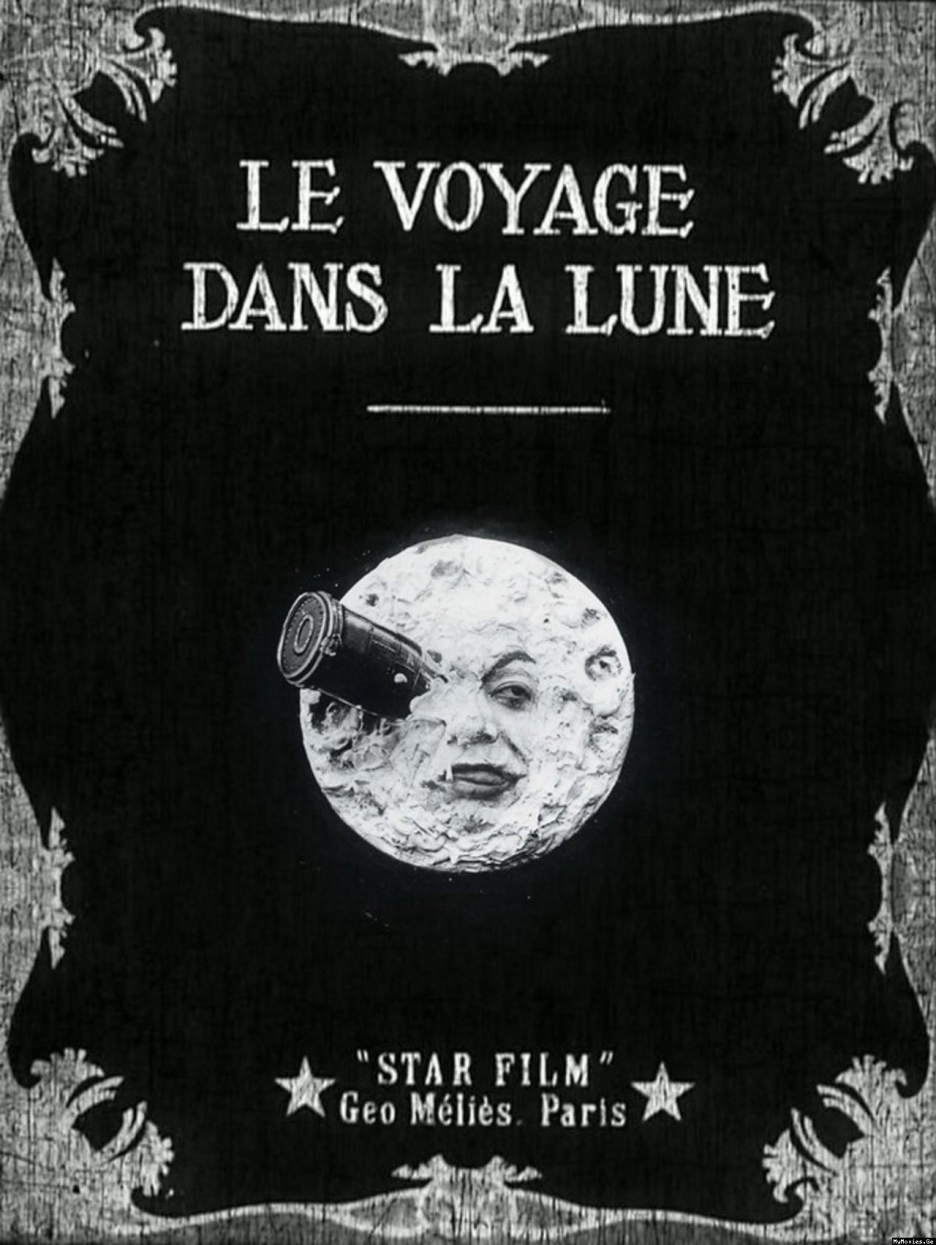
One of the movies assigned this week, title "Le voyage dans la lune" (A Trip to the Moon), directed by Georges Melies in 1902 is certainly noteworthy. A couple minutes into watching the silent short I realized I had already watched it in an English class a few years ago. 
Also, the iconic scene where the shell hits the moon's eye was in the movie Hugo (2011),  which features Georges Melies as one of the central characters. Watch a scene from Martin Scorsese's Hugo: http://youtu.be/oNFpTsbUR0k

I appreciated the fact that since this film was silent, the actors had to communicate to the viewer with the use of constant movement. Just having read the first chapter of Looking at Movies, I have already been introduced to a few cinematic techniques that help portray a movie maker's vision into a captured motion picture and I can definitely notice the motion picture's evolution. It was interesting to be taken back to a time when different angle shots were not being employed, but instead only the focus characters moved differently than the people in the background.

In contrast, the other silent short assigned for this unit titled "The Great Train Ride" did not thoroughly amuse me. I recognize that its an important piece of movie-making history, but I found myself lost about halfway. I have realized I, like many people, have become accustomed to the manipulation invisibly present in movies of today. Nowadays, you can be doing chores while periodically glancing at movies and still have an idea of what is going on in the story and how you should be feeling about the particular scene; soundtracks and various shooting techniques play major roles in manipulating films into exactly what their respective makers want to present to viewers.